Ad
Bevel Gear Spec Table
Bevel Gear Specifications — 16 sizes
KS B 1401ISO 10300JIS B 1704DIN 3971
A conical gear transmitting power between intersecting shafts. Used in right-angle reducers and differentials.
Practical Notes
- Shaft perpendicularity is critical. Deviation from 90° causes poor tooth contact, noise, and rapid wear.
- Spiral bevel outperforms straight bevel in noise and strength. Prioritize spiral for new designs.
Selection Guide
Transmits power between intersecting shafts. Includes straight, spiral, and hypoid types; spiral bevel offers superior noise and strength characteristics.
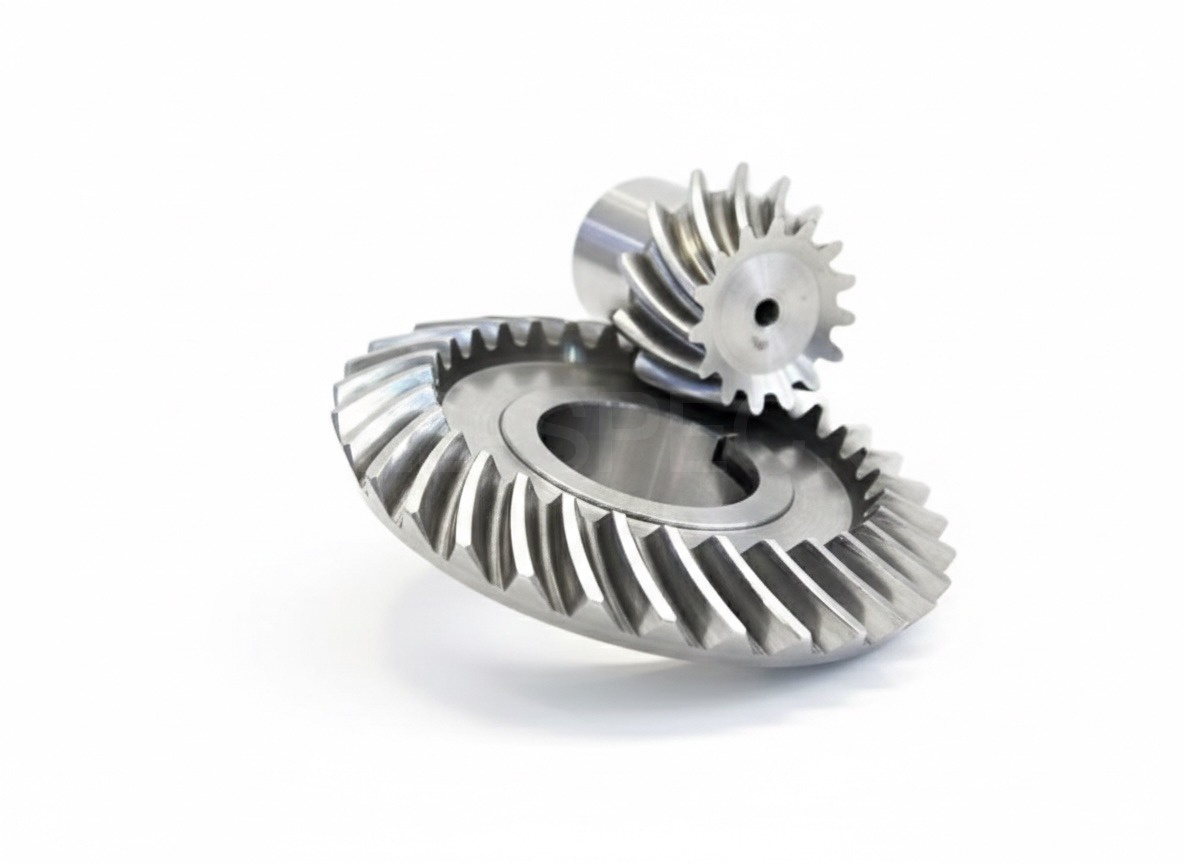 Bevel Gear
KSISOJISDINBevel Gear
4 sizesThe dimensions below are identical across KS B 1401 · ISO 10300 · JIS B 1704 · DIN 3971.
| Nominal | m | α | ha | Formula | Use |
|---|---|---|---|---|---|
| M1 Bevel | 1 | 20° | 1 | d=mZ | Right Angle Drive 1:1~5:1 |
| M1.5 Bevel | 1.5 | 20° | 1.5 | d=mZ | Differential, Machine Tool |
| M2 Bevel | 2 | 20° | 2 | d=mZ | Industrial Right Angle |
| M3 Bevel | 3 | 20° | 3 | d=mZ | Large Right Angle Drive |
Key Features
- Teeth on conical surface transmit power between perpendicular (90°) or arbitrary angle shafts
- Straight, spiral, and zerol bevel tooth forms differ in noise and load characteristics
- Gear ratio typically 1:1–1:5; larger ratios replaced by hypoid gears
Key Applications
Automotive differentials, machine tool right-angle drives, marine propeller shafts, aircraft accessory gears, agricultural PTO
FAQ
Difference between spiral and straight bevel gears?
Spiral bevel has curved teeth — quieter, smoother, stronger. Straight bevel is simpler and cheaper but noisier.