Tapping Screw Spec Table
A self-tapping screw that cuts its own thread into the mating material. Commonly used on sheet metal, plastic, and wood.
Practical Notes
- Thread wears with repeated fastening. For 3+ disassembly cycles, design with rivet nut + bolt instead.
- For plastic, boss OD must be 2× screw OD minimum to prevent cracking.
Selection Guide
Self-tapping screws cut their own threads — for sheet metal (0.5–3mm), plastic, and light alloys. Choose thread form by base material and thickness. Repeated fastening wears threads; for frequent disassembly, rivet nut + bolt combinations are preferable.
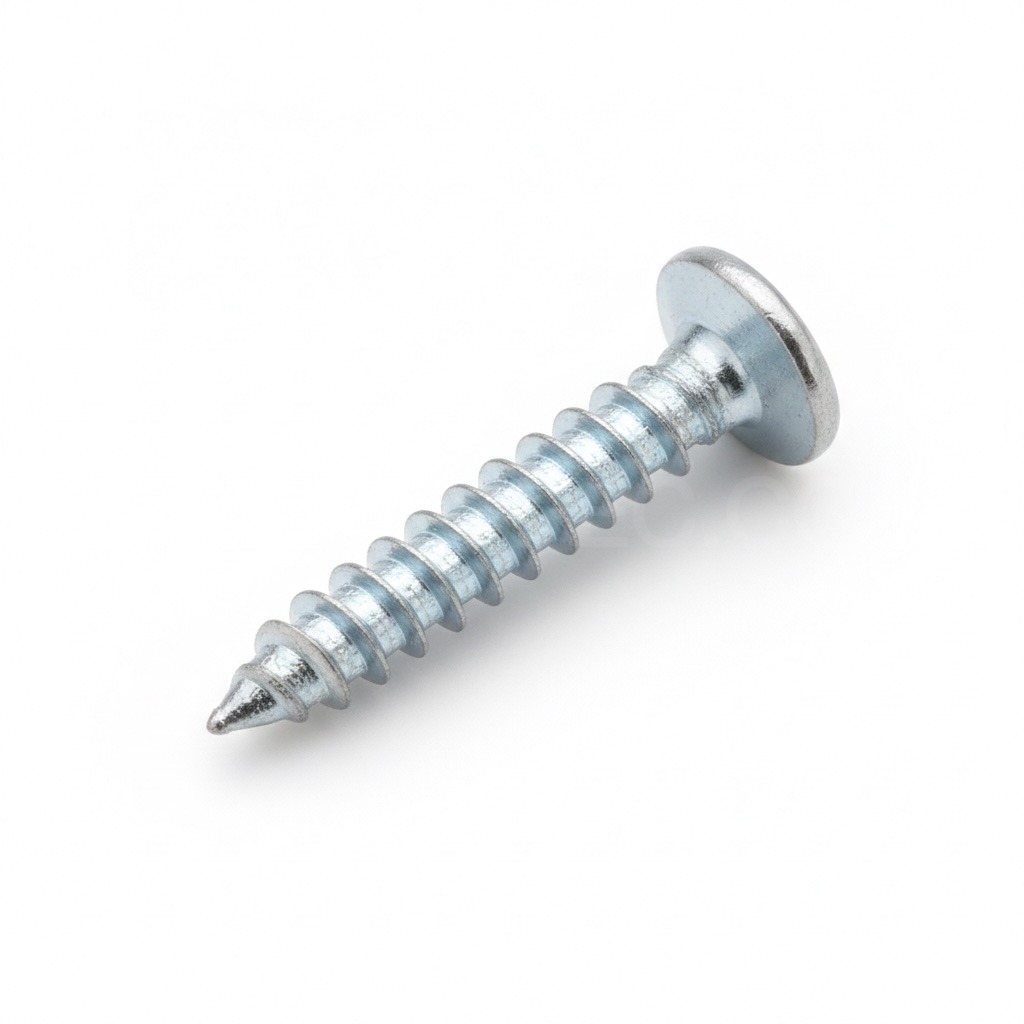 Tapping Screw
KSJISTapping Screw
8 sizesThe dimensions below are identical across KS B 1032 · JIS B 1115.
| Nominal | d | P | Head Dia | Wrench | Other |
|---|---|---|---|---|---|
| ST2.2 | 2.2 | 0.8 | 4.2 | - | - |
| ST2.6 | 2.6 | 1.05 | 5 | - | - |
| ST3 | 3 | 1.2 | 5.6 | - | - |
| ST3.5 | 3.5 | 1.3 | 6.9 | - | - |
| ST4 | 4 | 1.4 | 7.85 | - | - |
| ST4.8 | 4.8 | 1.6 | 9.5 | - | - |
| ST5.5 | 5.5 | 1.8 | 10.8 | - | - |
| ST6.3 | 6.3 | 1.8 | 12.5 | - | - |
Key Features
- Self-tapping thread-forming eliminates separate tapping operation
- Triangular thread (Type AB/B) or machine screw thread (Type F) selectable
- Dedicated ST2.2–ST9.5 designations; designed for thin sheet, plastic, and light alloys
Key Applications
Sheet metal assembly, appliance housings, automotive interiors, plastic part fastening, HVAC ducts
FAQ
Difference between tapping and drilling screws?
Tapping screws cut threads only (pilot hole needed). Self-drilling screws drill and tap simultaneously — no pilot hole required.
Can tapping screws be used in plastic?
Yes, but boss OD must be 2× screw OD to prevent cracking. Dedicated plastic screws (PT type) are safer.