Carbon Steel Pipe Spec Table
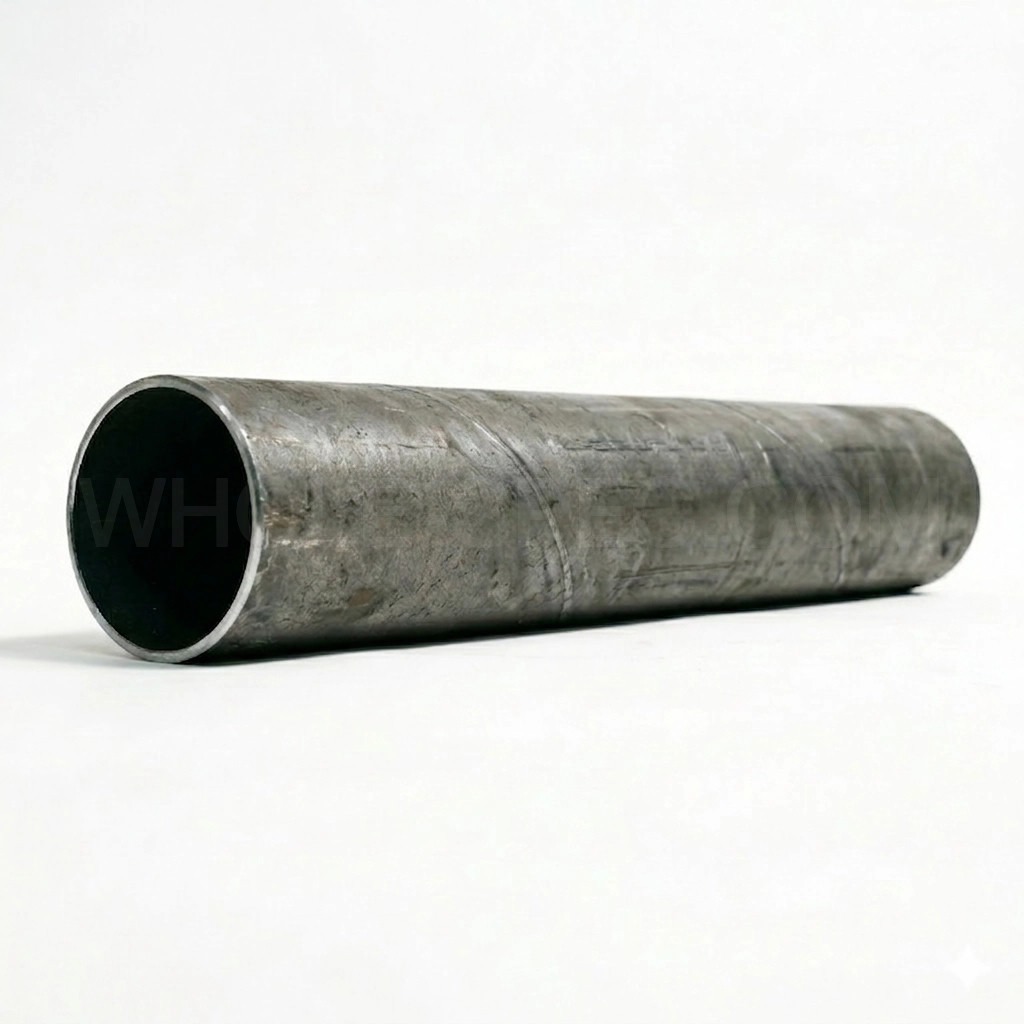
General-purpose carbon steel pipes for water, steam, air, and gas lines. Follows KS D 3507 (SGP) and KS D 3562 standards.
Practical Notes
- Select wall thickness by Schedule number. Sch 40 is standard; Sch 80 for high pressure.
- Black pipe (uncoated) for indoor/buried; galvanized (white) pipe for outdoor/exposed. Choose coating by application.
Selection Guide
General-purpose carbon steel pipe for water, steam, air, and gas. Wall thickness selected by schedule number (Sch 40 standard). Black pipe for indoor/buried; galvanized (white) pipe for outdoor/exposed. For corrosion resistance, consider stainless steel pipe.
 Carbon Steel Pipe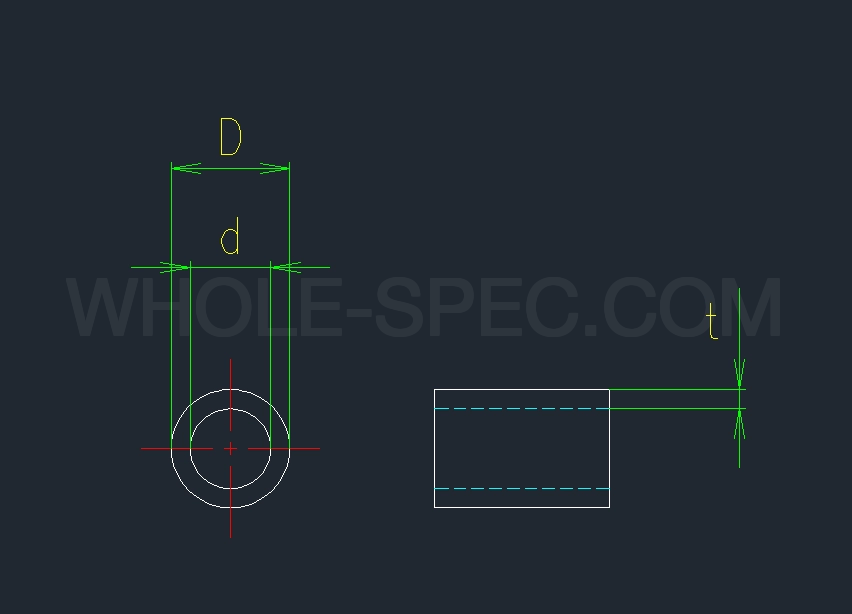
KSJISCarbon Steel Pipe
11 sizesThe dimensions below are identical across KS D 3507 · JIS G 3452.
| Nominal | D | t | d | Weight | Standard |
|---|---|---|---|---|---|
| 15A | 21.7 | 2.8 | 16.1 | 1.31 | KS D 3507 |
| 20A | 27.2 | 2.8 | 21.6 | 1.68 | KS D 3507 |
| 25A | 34 | 3.2 | 27.6 | 2.43 | KS D 3507 |
| 32A | 42.7 | 3.5 | 35.7 | 3.38 | KS D 3507 |
| 40A | 48.6 | 3.5 | 41.6 | 3.89 | KS D 3507 |
| 50A | 60.5 | 3.8 | 52.9 | 5.31 | KS D 3507 |
| 65A | 76.3 | 4.2 | 67.9 | 7.47 | KS D 3507 |
| 80A | 89.1 | 4.2 | 80.7 | 8.79 | KS D 3507 |
| 100A | 114.3 | 4.5 | 105.3 | 12.2 | KS D 3507 |
| 125A | 139.8 | 4.5 | 130.8 | 15 | KS D 3507 |
| 150A | 165.2 | 5 | 155.2 | 19.8 | KS D 3507 |
Key Features
- KS D 3507 (SPP) / ASTM A53; nominal bore A (6A–500A) or B (1/8"–20") system
- Wall thickness graded by Sch 10/20/40/80/160; Sch 40 is general-purpose default
- Black pipe (uncoated) / white pipe (hot-dip galvanized); corrosion grade selected by application
Key Applications
Building water supply/drainage, fire sprinklers, steam piping, plant utilities, HVAC chilled/hot water
In-Depth Guide
Nominal pipe size (NPS / A) is neither the OD nor the ID — the most common dimension mistake
A pipe nominal size (NPS, or the "A" designation) is just a label, not the measured outer or inner diameter. For example, a 1/2" (15A) pipe has an actual OD of 21.3 mm, and its ID changes again with wall thickness (Sch). The key principle is that for a given nominal size the OD stays constant as the Sch changes, and only the ID varies — that is what lets same-size fittings and flanges fit regardless of wall thickness. Also, up to NPS 12" the actual OD is larger than the nominal inch, but from 14" up the OD equals the nominal inch. So when you need the OD, do not treat the nominal as millimeters — read it from the standard OD table.
SGP (KS D 3507) vs STPG (KS D 3562) — why you must not use SGP for pressure piping
They share the same OD system and look identical, but their guaranteed properties are completely different. SGP (SPP, ordinary piping carbon steel pipe) is for low-pressure general piping below about 1 MPa — water, air, low-pressure steam — with low guaranteed tensile and hydrostatic-test levels. Pressure and high-temperature lines must use STPG370 / STPG410 (pressure-piping carbon steel pipe), whose strength and testing are guaranteed. Using SGP on high-pressure steam, boilers or hydraulics just because it looks the same is a code violation and a rupture risk. Before ordering or installing, check the line pressure and temperature first and split SGP from STPG accordingly.
Black vs galvanized pipe, and zinc fume (toxic) and porosity when welding galvanized
Black pipe (uncoated) goes in indoor, painted or buried lines where corrosion is controlled, while galvanized (hot-dip zinc) pipe goes outdoors and in exposed or wet environments. The critical caution is welding galvanized pipe — welding straight over the zinc vaporizes it into a white smoke, which if inhaled causes metal fume fever (chills and fever), and the zinc gets into the weld and causes porosity and cracking. So on galvanized pipe, grind the coating off the weld prep first, ventilate well, and repair the damaged coating with a zinc-rich paint afterward. Where possible, joining galvanized pipe by threads, flanges or grooved couplings is safer than welding.
Threaded vs welded joints — size limits and leak traps
Small bore (roughly 50A and below) is usually joined with taper threads (PT/NPT) and sockets, but at 65A and up or higher pressure you move to butt weld (BW), socket weld (SW) or flanges. A threaded joint loses pressure strength because the pipe wall is cut away at the thread, and it tends to loosen and leak under vibration and temperature swings. Seal threads with PTFE tape or a liquid sealant — wrap the tape in the direction of thread engagement, note that over-wrapping can actually split the fitting, while a liquid sealant suits larger bores and higher temperatures. The larger the pressure and bore, the more welding or flanges, not threads, are the proper choice.
What the Schedule number is, STD/XS/XXS, and corrosion allowance
The Schedule (Sch) number is a thickness class based roughly on 1000 × P/S (P = working pressure, S = allowable stress), so higher pressure needs a higher Sch. In small bores Sch 40 ≈ STD and Sch 80 ≈ XS are nearly the same, but in large bores STD/XS and Sch diverge, so do not mix the two systems on big pipe. For the same Sch, the absolute wall thickness grows as the nominal size increases. In design, add a corrosion allowance (typically 1–3 mm) for the metal that corrosion and erosion will thin away, and let that push you up one Schedule — choosing on the table minimum thickness alone can leave the pipe short on pressure strength later in life.
STEP File Downloads
Free 3D CAD models (STEP AP214). Built to real standard dimensions; threads are simplified (plain shank) per free-library convention.
FAQ
What does Schedule (Sch) number mean?
Higher schedule = thicker wall. Sch 10 (light), Sch 40 (standard), Sch 80 (high pressure). Internal diameter decreases as Sch increases for the same nominal size.