Ad
Split Pin Spec Table
Split Pin Specifications — 24 sizes
KS B 1364ISO 1234JIS B 1351DIN 94
A split (cotter) pin bent open after insertion to lock slotted nuts and clevis pins.
Practical Notes
- Never reuse split pins. Bending legs back and forth causes metal fatigue and easy breakage.
- Bend both legs in opposite directions against the bolt. Bending only one leg provides insufficient retention.
Selection Guide
Safety pin used with castle nuts or clevis pins for physical anti-withdrawal. Bend legs after insertion. Single-use only — replace with new pin on each disassembly. For safety-critical joints in automotive tie rods, aircraft control cables, etc.
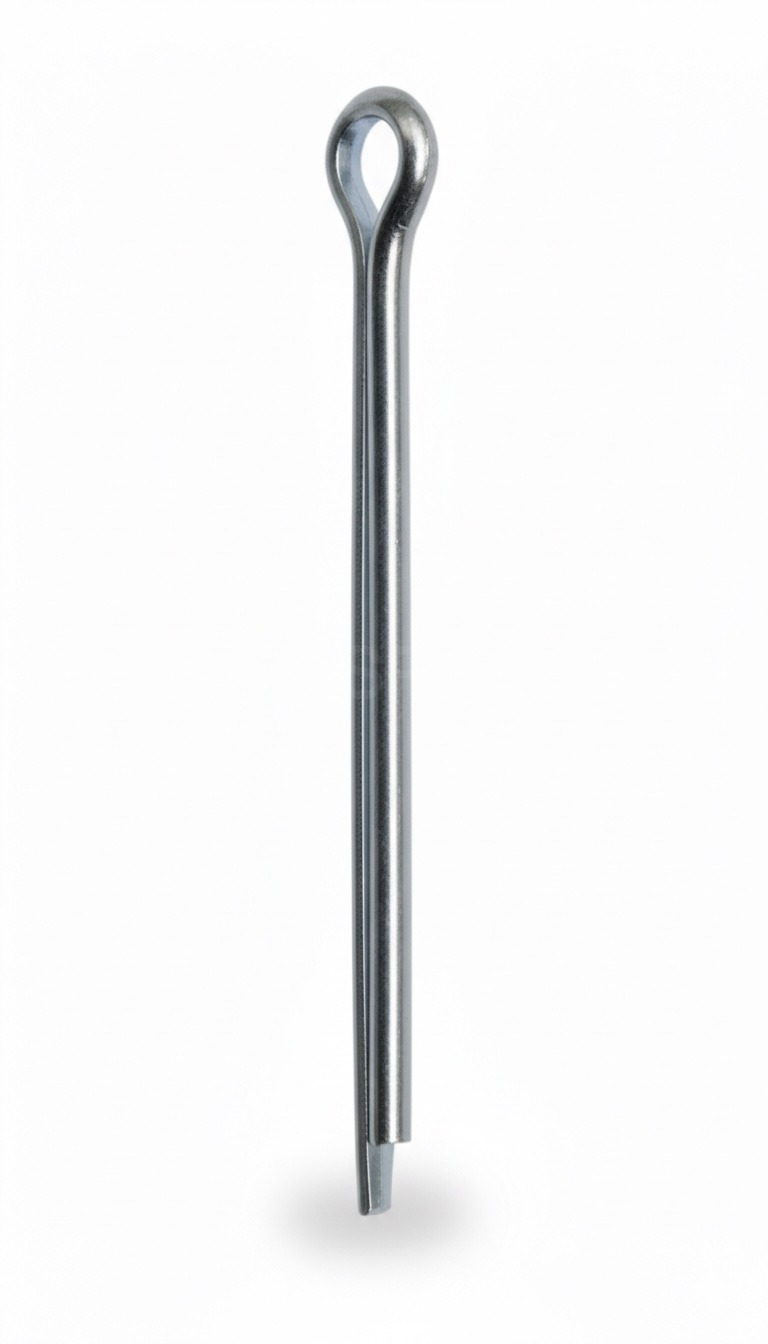 Split Pin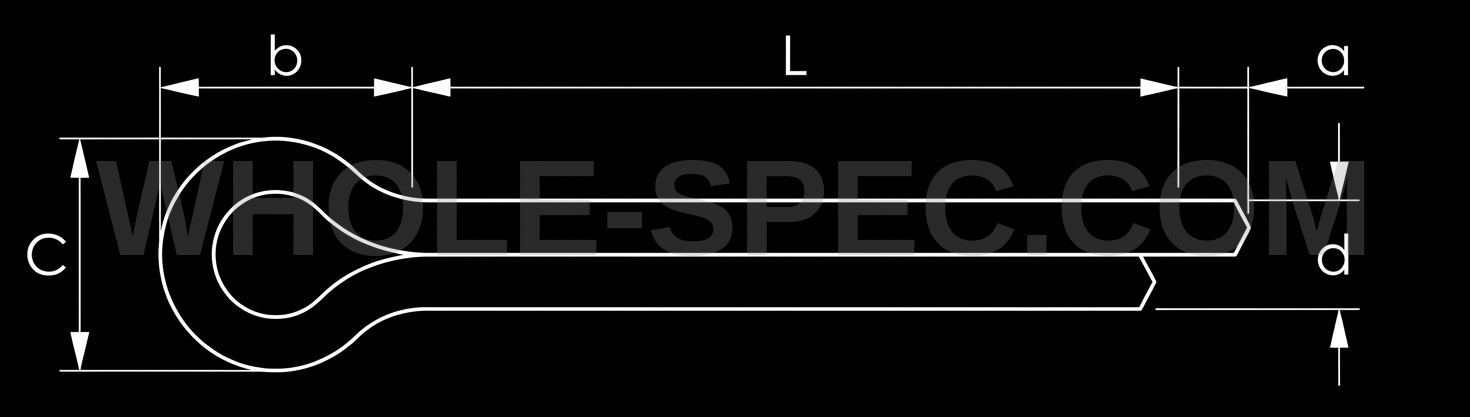
KSISOJISDINSplit Pin
6 sizesThe dimensions below are identical across KS B 1364 · ISO 1234 · JIS B 1351 · DIN 94.
| Nominal | d (Nom. Dia) | b (Eye Length) | C (Eye Width) | a (Point Offset) | L (Length) | Material | Standard |
|---|---|---|---|---|---|---|---|
| 1.6×20 | 1.6 | 3.2 | 2.8 | 2.5 | 20 | Low Carbon Steel | KS B 1364 |
| 2×25 | 2 | 4 | 3.6 | 2.5 | 25 | Low Carbon Steel | KS B 1364 |
| 2.5×30 | 2.5 | 5 | 4.6 | 2.5 | 30 | Low Carbon Steel | KS B 1364 |
| 3.2×40 | 3.2 | 6.4 | 5.8 | 3.2 | 40 | Low Carbon Steel | KS B 1364 |
| 4×50 | 4 | 8 | 7.4 | 4 | 50 | Low Carbon Steel | KS B 1364 |
| 5×60 | 5 | 10 | 9.2 | 4 | 60 | Low Carbon Steel | KS B 1364 |
Key Features
- Two half-round wires combined; legs bent after insertion to prevent withdrawal
- KS B 1322 / ISO 1234; mandatory pairing with slotted (castle) nuts
- Single-use safety pin; must be replaced with new pin on each disassembly
Key Applications
Automotive tie rod ends, aircraft control cables, crane pins, agricultural hitches, safety-critical linkages
FAQ
Why shouldn't split pins be reused?
Bending legs back and forth causes metal fatigue and easy breakage. Split pins are safety components — always use new ones.