Ad
Worm Gear Spec Table
Worm Gear Specifications — 9 sizes
KS B 1401ISO 14521JIS B 1723
A gear set (worm + worm wheel) achieving high reduction ratios in a single stage. Self-locking property suits lifts and hoists.
Practical Notes
- Low efficiency (40–90%) generates significant heat. Oil lubrication and cooling fins are essential.
- Self-locking only works at small lead angles. At large lead angles, back-driving is possible — add a brake.
Selection Guide
Achieves high reduction ratios (1:10–1:80) in a single stage with self-locking (back-drive prevention). Low efficiency (40–90%) and significant heat generation require careful lubrication and cooling.
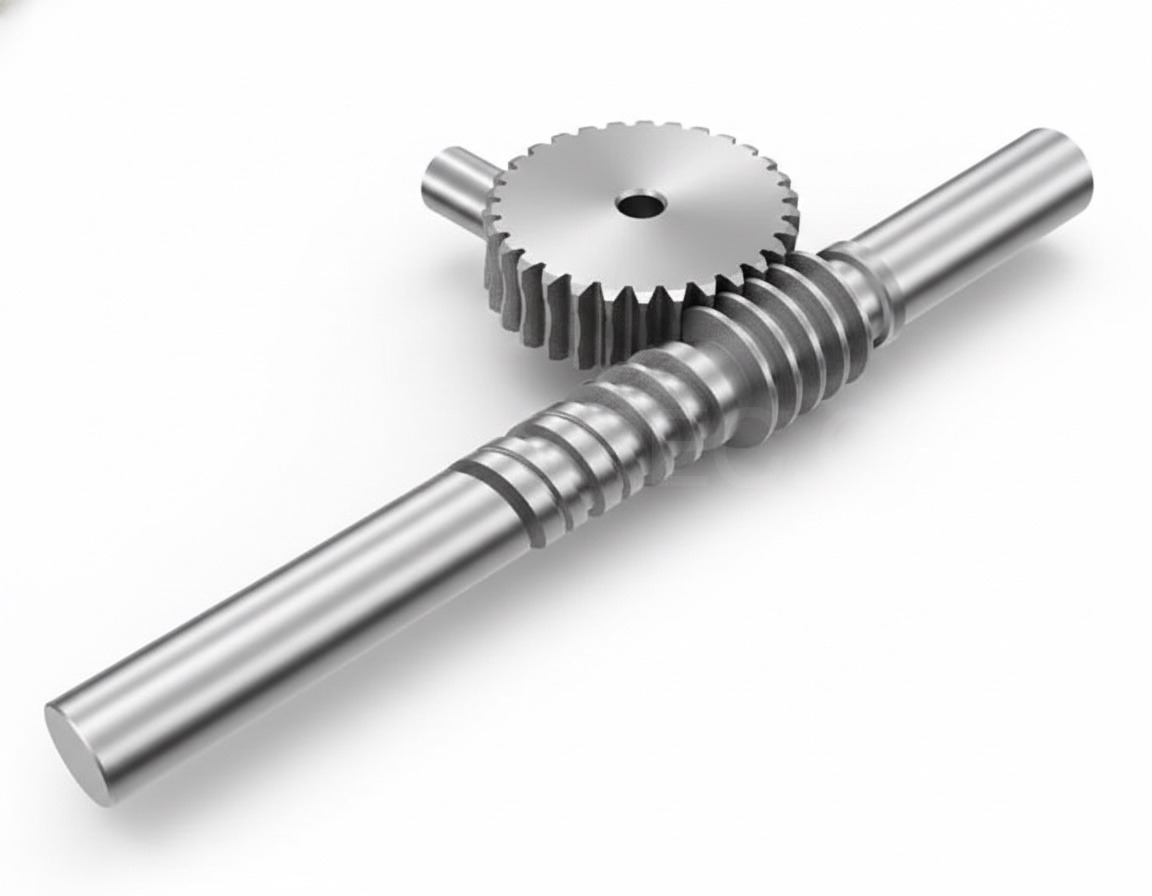 Worm Gear
KSISOJISWorm Gear
3 sizesThe dimensions below are identical across KS B 1401 · ISO 14521 · JIS B 1723.
| Nominal | m | α | ha | Formula | Use |
|---|---|---|---|---|---|
| M1 Worm | 1 | 20° | - | i=Z2/Z1 | High Ratio, Self-locking |
| M2 Worm | 2 | 20° | - | i=Z2/Z1 | Conveyor, Hoist |
| M3 Worm | 3 | 20° | - | i=Z2/Z1 | Industrial High Ratio |
Key Features
- Worm + worm wheel combination achieves 10:1–100:1 large reduction ratio in single stage
- Self-locking characteristic; reverse drive impossible at lead angle ≤5°
- Significant friction heat from sliding contact; lubrication and heat dissipation design critical
Key Applications
Elevator hoists, conveyor reduction, valve actuators, tuning mechanisms (instruments), antenna rotation
FAQ
Does worm gear self-locking always work?
Reliable only when lead angle is below ~6°. High lead angles or good lubrication may allow back-driving — add a separate brake if needed.