Ad
Spur Gear Spec Table
Spur Gear Specifications — 40 sizes
KS B 1401ISO 1328JIS B 1702DIN 3960
The most basic gear with straight teeth for power transmission between parallel shafts. Simple to design and manufacture.
Practical Notes
- Mating gears must share the same module (m). Different-module gears cannot mesh.
- If gear noise is excessive, improve tooth surface finish (JIS grade) or consider switching to helical gears.
Selection Guide
The most basic gear with teeth parallel to the axis. Easy to manufacture with no axial force. Relatively noisy, suited for low-to-medium speed. Mating gears must share the same module.
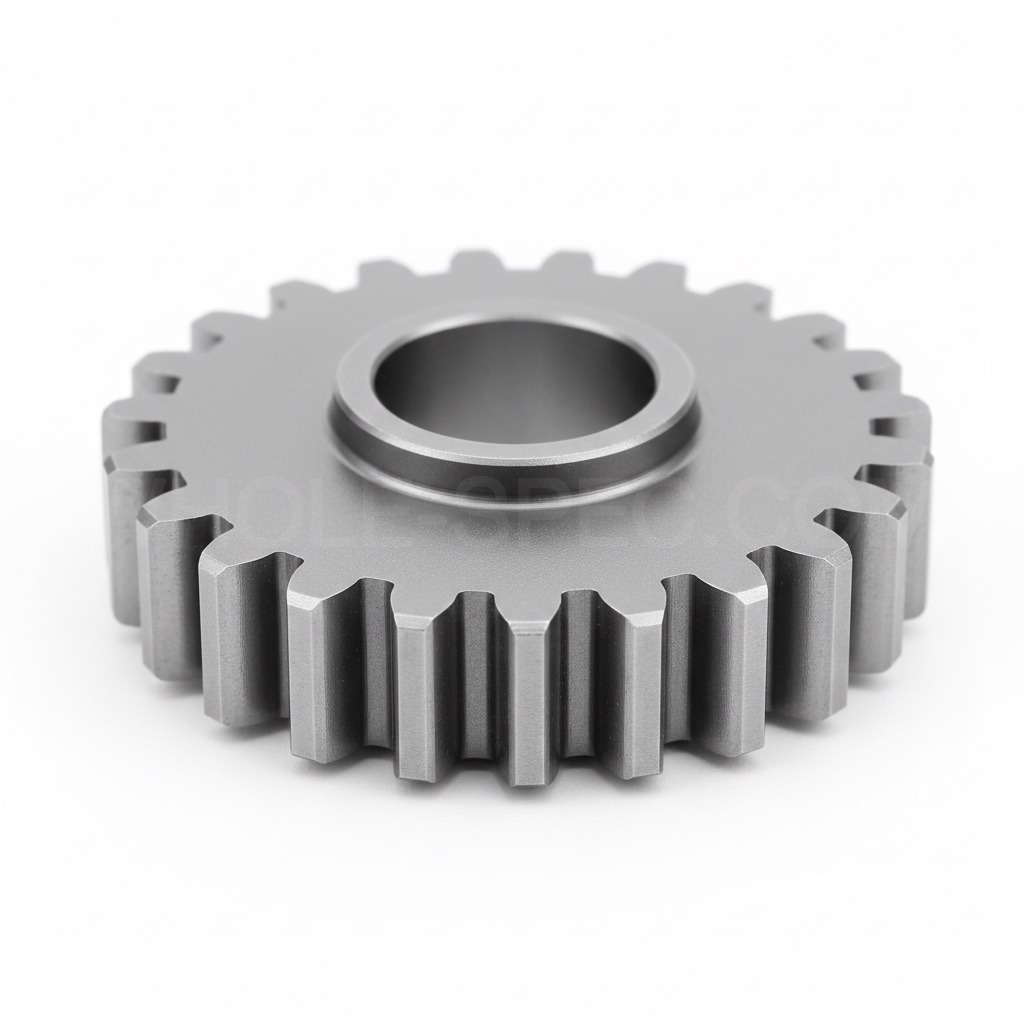 Spur Gear
KSISOJISDINSpur Gear
10 sizesThe dimensions below are identical across KS B 1401 · ISO 1328 · JIS B 1702 · DIN 3960.
| Nominal | m | α | ha | Formula | Use |
|---|---|---|---|---|---|
| M0.5 | 0.5 | 20° | 0.5 | d=mZ, D=m(Z+2) | Precision, Watch |
| M0.8 | 0.8 | 20° | 0.8 | d=mZ, D=m(Z+2) | Small Reducer, Robot |
| M1 | 1 | 20° | 1 | d=mZ, D=m(Z+2) | General Machine |
| M1.5 | 1.5 | 20° | 1.5 | d=mZ, D=m(Z+2) | Machine Tool, Conveyor |
| M2 | 2 | 20° | 2 | d=mZ, D=m(Z+2) | Industrial, Med. Reducer |
| M2.5 | 2.5 | 20° | 2.5 | d=mZ, D=m(Z+2) | Med. Machine, Hoist |
| M3 | 3 | 20° | 3 | d=mZ, D=m(Z+2) | Large Machine, Crane |
| M4 | 4 | 20° | 4 | d=mZ, D=m(Z+2) | Large Machine, Rolling Mill |
| M5 | 5 | 20° | 5 | d=mZ, D=m(Z+2) | Large Industrial |
| M6 | 6 | 20° | 6 | d=mZ, D=m(Z+2) | Extra Large Machine |
Key Features
- Teeth are straight and parallel to axis (spur); simplest gear form
- Module (m) 0.5–10 range; teeth count (z) × module = pitch circle diameter (PCD)
- KS B 1405 / ISO 1328 precision grades; profile shift coefficient (x) prevents undercut
Key Applications
Reducer first-stage gear, printing press roller drive, automotive reverse gear, clock gear trains, industrial robot joints
FAQ
How to select gear module (m)?
Determined by torque and tooth count. Small precision machines: m0.5–1; general industrial: m2–4; heavy equipment: m5+. More teeth at the same module increase pitch diameter and contact ratio.